
Bridge assessments, delivered as a digital twin.
Bridges are costly and disruptive to inspect up close. We are exploring repeatable autonomous capture of decks, girders, piers, and bearings, delivered as a 3D model with condition observations located on it, to support the inspectors who sign off.
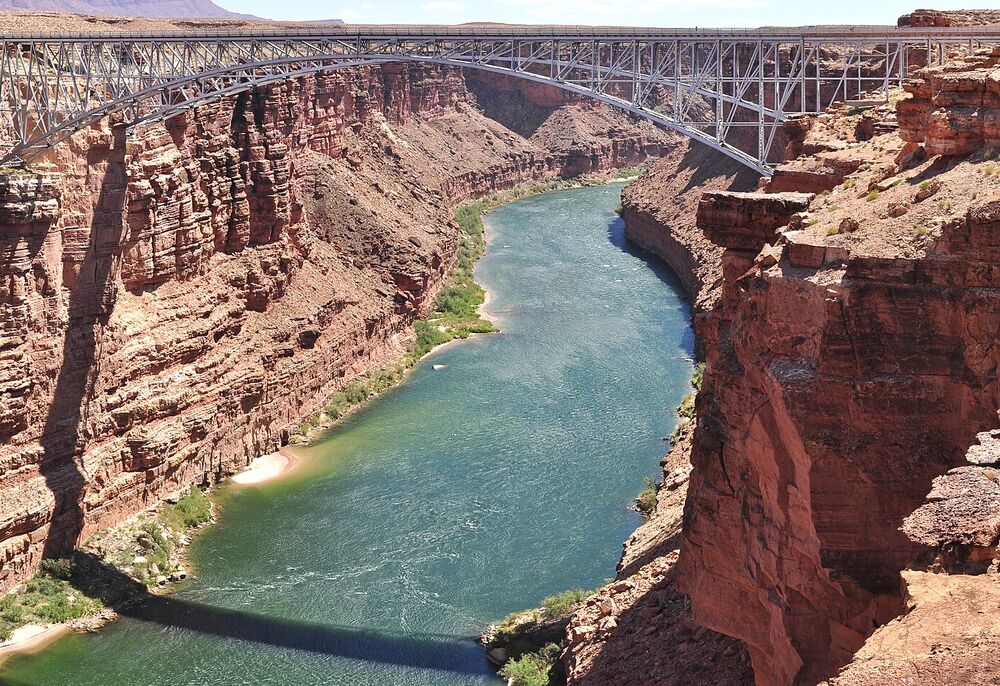
What a bridge assessment would look like
An outline of the workflow we are designing. The details depend on what owners tell us matters.
- 01
Scope
You tell us which bridges, what triggered the request (an inspection cycle, a reported condition, post-event review), and what your inspectors need. We agree the deliverable and price.
- 02
Capture
Autonomous drone capture of the deck, girders, piers, bearings, and approaches, including views under the structure, subject to site access and airspace constraints.
- 03
Model and analyze
Imagery and, where useful, LiDAR become a measurable 3D model. AI-assisted analysis flags visible conditions such as cracking, spalling, and corrosion for review.
- 04
Deliver
You receive the model, observations located on it with their evidence, and the other items agreed in scope. Each assessment is a record to compare with the next.
The bridge deliverable, in plain terms
Not every assessment includes every item. Scope is agreed before work starts.
3D model of the bridge
A measurable representation you can rotate and inspect remotely.
Element-level imagery
Close views of girders, bearings, piers, and joints, organized by location on the structure.
Condition observations with evidence
Visible cracking, spalling, corrosion, and displaced components, each located on the model.
Comparison with a prior inspection
Highlights what changed. Depends on repeat assessments.
What it can and cannot tell you
Bridge inspections are governed by federal and state programs and performed by qualified inspectors. Argis Labs data is meant to support those inspectors with better, repeatable evidence. It does not replace a hands-on inspection where one is required, a load rating, or an engineer's judgment.
What we still need to learn from owners
We are speaking with bridge and transportation owners. These are the questions we would most like help with.
- Which inspection tasks are hardest, riskiest, or most disruptive today (lane closures, snooper trucks, rope access)?
- What do your inspectors need to see, and in what format, to rely on remote data?
- How do you track condition between inspection cycles?
- Who receives findings: in-house engineers, a consultant, or the state?
- What would a successful pilot on a few of your bridges look like?
Tell us about your assets.
Tell us what you manage and what you need to assess. If it isn't something we can do yet, we would still like to learn what it should take.
Start a Conversation